A printed order of service, a handful of favourite photographs, messages sent after the funeral, a song everyone associates with them – grief often leaves memories scattered across places, devices and people. When families ask what is an online memorial, they are usually asking something deeper too: how do we keep a loved one’s story together, accessible and lasting?
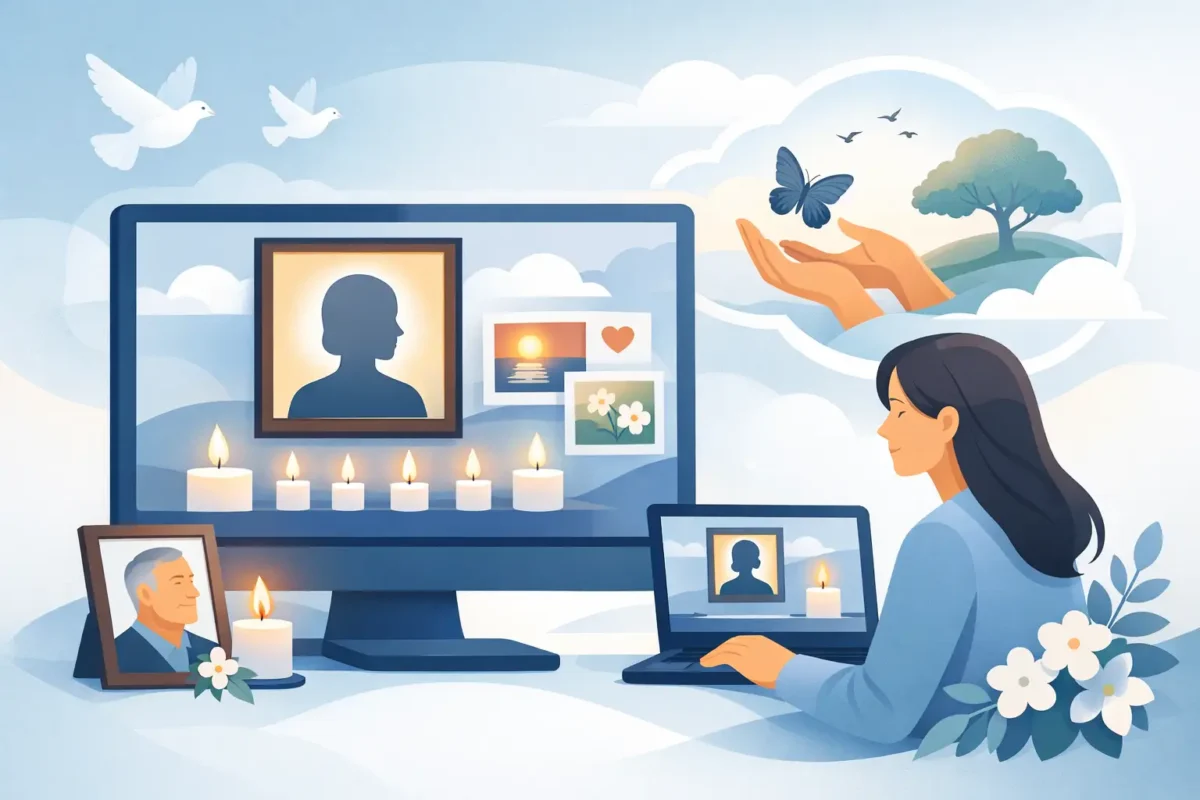
An online memorial is a dedicated digital space created to honour someone who has died. It brings together the pieces of a life – photographs, videos, written tributes, obituary details, music, personal stories and messages from family and friends – into one place that can be visited over time. Rather than replacing traditional remembrance, it adds something many families now need: a way to preserve and share memories beyond a headstone, a funeral notice or a social media post.
What is an online memorial in practical terms?
In simple terms, it is a memorial page or private online tribute that lives on a secure digital platform. Think of it as a lasting home for memories, rather than a temporary post or a folder hidden on one person’s phone.
A good online memorial is organised, easy to visit and built with care. It may include a life story, family photographs, voice notes, video clips, meaningful dates, condolence messages and contributions from different relatives. Some memorials are fully public, while others are private or shared only with invited family members.
The most thoughtful versions also connect the digital memorial to a physical place of remembrance. For example, a QR plaque at a gravesite, memorial bench or special location can allow someone to scan with a phone and immediately open the person’s tribute page. That can be especially comforting for families who want a physical marker and a fuller story in one experience.
Why families create online memorials
For many people, traditional remembrance still matters deeply. Flowers, headstones, ashes, prayer cards and anniversary visits all have their place. But they often cannot hold the full richness of a person’s life.
A name and two dates on a stone are powerful, but they cannot tell you how someone laughed, what music they loved, the stories they told at family gatherings or the photographs that captured ordinary happy days. An obituary can say who they were survived by, but it rarely shows the texture of a life.
That is where an online memorial can help. It gives families space to remember the whole person. Not only the moment of loss, but the life that came before it.
It also meets a practical need. Families are often spread across towns, countries and generations. Not everyone can visit a grave regularly. Not everyone keeps the same albums or paperwork. A shared memorial page creates one place where loved ones can gather, contribute and return whenever they wish.
What an online memorial can include
There is no single correct way to build an online memorial. Some families keep it simple, with a short biography and a few favourite photographs. Others create something much more detailed over time.
Most online memorials include a mixture of visual memories and written reflection. That might mean photographs from childhood through later life, videos from birthdays or weddings, a carefully written obituary, funeral details, scanned letters, voice recordings, music that mattered to them, or messages from friends and relatives.
Often, the most meaningful additions are the smallest ones. A grandchild might upload a short note about Sunday lunches. A friend might share an old holiday photograph. A sibling might add the story behind a lifelong nickname. These details are rarely preserved elsewhere, yet they are often what future generations cherish most.
The difference between an online memorial and social media
Some people wonder whether a social media profile already serves the same purpose. It can hold photographs and comments, but it is not really designed for lasting remembrance.
Social platforms are built around constant updates, changing feeds and broad visibility. Posts become buried. Privacy can feel unclear. The tone can also be unsettling, especially when memorial content sits beside everyday scrolling.
An online memorial is more intentional. It is created specifically for remembrance. The content is gathered in one place, usually in a calmer and more respectful format. Families have clearer control over what is included, who can view it and how the person’s story is presented.
That difference matters. During grief, many families want a space that feels dedicated, not accidental.
What makes a good online memorial?
The best memorials tend to share a few qualities. They are easy to use, respectful in design and flexible enough to grow over time.
Ease matters because grief can make even simple tasks feel heavy. Families should not have to wrestle with complicated systems to upload a photo or write a tribute. A memorial should feel supportive from the start.
Longevity matters too. If a family is investing time and emotion into building a tribute, they want confidence that it will remain accessible. An online memorial should feel like a lasting way to remember, not a short-term page that may disappear when it is needed most.
Privacy is another important consideration. Some families want the memorial to be open to everyone who knew the person. Others prefer a more private space for relatives and close friends. Neither approach is more correct – it depends on the family, the circumstances of the loss and the kind of sharing that feels appropriate.
Collaboration can also make a real difference. One person rarely holds every memory. When a memorial allows different family members to add stories, photographs and messages, it becomes richer and more complete.
Is an online memorial only for recent loss?
Not at all. While many are created shortly after someone dies, others are built months or even years later.
Sometimes the funeral passes in a blur and the family only later has the emotional space to gather memories properly. Sometimes adult children decide they want to preserve a parent’s history before photographs are lost or stories fade. Sometimes grandchildren begin asking questions and the family wants one place where those answers can live.
An online memorial can support fresh grief, but it can also serve long-term remembrance. In many cases, its value grows with time.
What is an online memorial for future generations?
This is one of the most meaningful parts of it. An online memorial is not only for the people grieving today. It can also become a record for the people who come after.
Children and grandchildren do not just inherit names. They inherit stories, character, values and family history. A memorial page can preserve the details that make someone real to those who never met them, or who were too young to remember clearly.
That may be a wedding speech, a favourite recipe, military service history, music from a first dance, or a story about how they built a family home. These are not small things. They are the threads of legacy.
Because every story deserves to be seen forever, the act of preserving these memories becomes more than administration. It becomes an expression of love.
The role of a QR memorial plaque
For some families, the most powerful memorials connect the digital and physical together. A QR memorial plaque offers a simple example of that.
Placed at a gravesite or another meaningful location, the plaque gives visitors a way to access the online memorial instantly with a smartphone scan. Instead of standing only before a name and dates, they can step into the fuller story – photographs, words, music and memories that bring the person closer.
This can be especially moving for relatives who travel to visit, for younger family members who are discovering their history, or for friends who want to leave a message after the funeral has long passed.
Seen Forever has been built around this idea: a physical marker connected to a permanent digital tribute, so remembrance can be both tangible and accessible.
Is an online memorial right for every family?
It depends on what remembrance means to you. Some families want a very private form of grief and may prefer to keep memories entirely offline. Others feel strongly that a loved one’s story should be gathered, protected and shared.
For many, an online memorial works best not as a replacement for traditional remembrance, but as an extension of it. It can sit alongside a grave, an urn, a memorial service or a family ritual. It simply gives those acts a wider and more lasting home.
If you are considering one, the question may not only be what is an online memorial. It may be what kind of remembrance will feel most true to the person you love.
The best answer is usually the one that helps their life remain present – not only in memory, but in story, voice and shared connection for the years ahead.
